What is LCHAD?
Long chain 3-hydroxyacyl-CoA dehydrogenase deficiency
A fatty acid oxidation disorder
Long-chain 3-hydroxyacyl-CoA dehydrogenase (LCHAD) deficiency is a rare
condition that prevents the body from converting certain fats to energy,
particularly during periods without food (fasting).
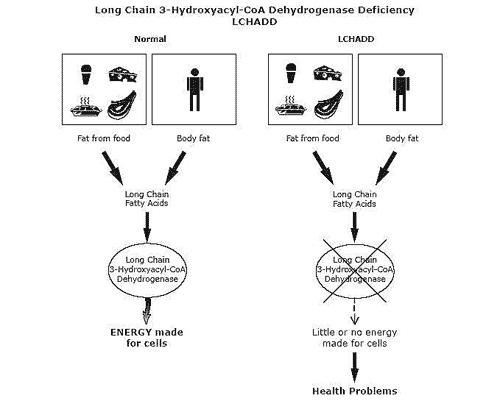
LCHAD occurs when an enzyme, called “long chain 3-hydroxyacyl-CoA
dehydrogenase” (LCHAD), is either missing or not working properly. This
enzyme’s job is to break down certain fats from the food we eat into
energy. It also breaks down fat already stored in the body. Energy from
fat keeps us going whenever our bodies run low of their main source of
energy, a type of sugar called glucose. Our bodies rely on fat when we
don’t eat for a stretch of time – like when we miss a meal or when we
sleep.
When the normal LCHAD enzyme is missing or not working well, the body
cannot break down fat for energy. Instead, it must rely solely on
glucose. Although glucose is a good source of energy, there is a limited
amount available. Once the glucose has been used up, the body tries to
use fat without success. This leads to low blood sugar, called
hypoglycemia, and to the build up of harmful substances in the blood.
Signs and symptoms of LCHAD deficiency typically appear during infancy
or early childhood and can include feeding difficulties, lack of energy
(lethargy), low blood sugar (hypoglycemia), weak muscle tone
(hypotonia), liver problems, and abnormalities in the light-sensitive
tissue at the back of the eye (retina). Later in childhood, people with
this condition may experience muscle pain, breakdown of muscle tissue,
and a loss of sensation in their arms and legs (peripheral neuropathy).
Individuals with LCHAD deficiency are also at risk for serious heart
problems, breathing difficulties, coma, and sudden death.
Problems related to LCHAD deficiency can be triggered by periods of
fasting or by illnesses such as viral infections. This disorder is
sometimes mistaken for Reye syndrome, a severe disorder that may develop
in children while they appear to be recovering from viral infections
such as chicken pox or flu. Most cases of Reye syndrome are associated
with the use of aspirin during these viral
infections.